English
 ภาษาไทย

Languages
CLC’s Purpose is to educate you about the religion and about the world change like business, health, travel etc.
Building Resilience and Confidence Through Preschool Learning
Share this content.
Submitted by clcthailandadmin on Wed, 06/10/2026 - 12:27
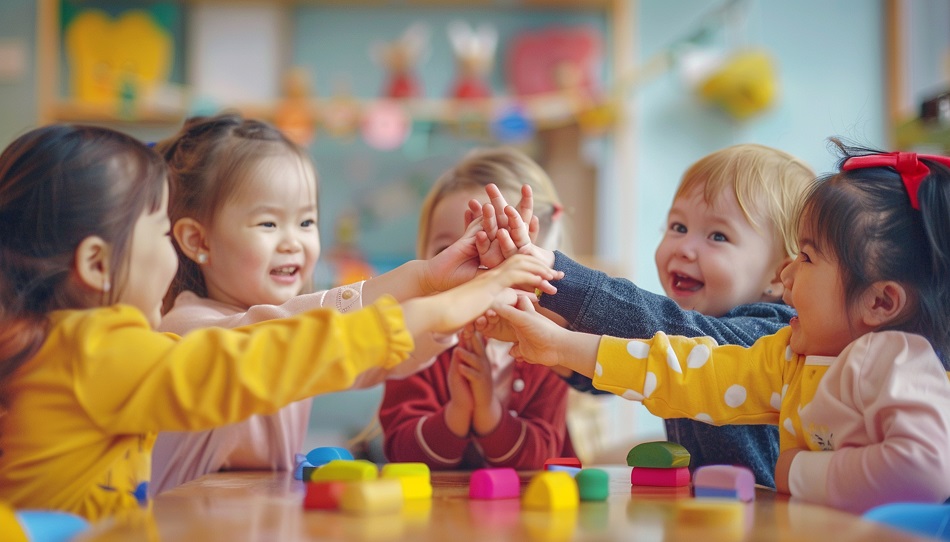
Foundation years of education has not been considered as preparatory for primary academic learning. Today in Thailand, modern families know that early childhood development forms the basis for social competence and success in life. A good Preschool environment is one of the most important decisions that influence how a child overcomes challenges. Through incorporating social-emotional learning alongside an inquiry based play, some early years international schools are redefining this first success to be centered on 2 key character traits resilience and confidence.
The Early Resilience Brews in the Brain
Developmentally, the brain achieves its sharpest rate of growth during the first five years. A well-organized Preschool environment uses this innate neurological flexibility to create Opportunities for Growth and Development, where guided challenges allow pre-schoolers to practice coping skills. If you allow children to solve age-appropriate problems for example, rebuilding a block tower that has just fallen or maneuvering through an obstacle course made with sensory material they make small mistakes in controlled spaces. In addition to helping children learn that failure is a not a permanent, fixed state but rather a natural learning process, these specialized educators also teach true cognitive resilience from the ground up.
Cultivating Confidence Through Agentic Learning
Instead, confidence is not a trait it is, in fact, a competency you can cultivate with agency and mastery. Many of the world-class international Preschool programs, including those based on Reggio Emilia philosophy or Early Years Foundation Stage (EYFS) framework also adopt child-led practices and provide children with choice. This is why, when a child engages the idea of choosing their own investigative projects (for example what plant to investigate or which paint colors will combine) it can create ownership over one's intellect. Accomplished self-directed learning in the classroom gives a deep sense of personal efficacy that turns reluctant toddlers into confident learners.
Social-Emotional Regulation in a Network with Peers
If by social environment, outside the family unit of a young child. An International Preschool Classroom A micro-society of Cultural Strata Within this space, children learn the intricate arts of negotiating, sharing, and regulating emotions. In instances of conflict about common property, teachers do not just intervene to resolve the issue, but guide students in communicating their feelings and in hearing perspectives from classmates with varied experiences. This practice, which grows as students gain exposure to a multitude of environments, helps them learn emotional intelligence and gives students the social confidence needed for them to feel secure in their own identity while respecting others.
Embracing Risk: Fostering Holistic Physical Environments
A corollary also of the two, and in political terms: Physical confidence is rooted in intellectual certainty. Early years campuses in Bangkok today include outdoor learning spaces that have been purposely designed to inspire purposeful risk-taking. The physical demands of climbing structures, mud kitchens and natural terrains test children to see what they can manage. Preschool provides a safe environment where children can push themselves to challenge their limits for instance, walking along a log or jumping off of a low height. The ability to manage these physical dangers translates into a greater readiness in later years of school to risk academic and creative potentials.
Connecting Early Years I Wellbeing and Future Academic Success
Long-term returns from a supportive early childhood education become increasingly apparent over time as students enter primary and secondary education. Children starting life in an environment focused around emotional fitness are less likely to enter higher grades with academic stress. They regard new subjects, not as threats to their self-esteem but as exciting challenges to be mastered. Major schools such as Brighton College International School Bangkok incorporate their early years curriculum in a way that allows emotional security and academic excellence to become connected, building on a young person's confidence forever.
One of Your Smartest Choices for the Modern Family
With the changing times and increasing requirement of flexibility and resilience in children, parenting can no longer be measured with one-dimensional happiness indicators like good studies. A forward-thinking Preschool is a proactive measure taken towards a strong mental and emotional framework for the child. In selecting an institution that prioritises well-being as a foundation to academic success, parents also guarantee that their children are not just literate and numerate, but more importantly resilient, confident and equipped with the tools needed to flourish in a world of uncertainty.